
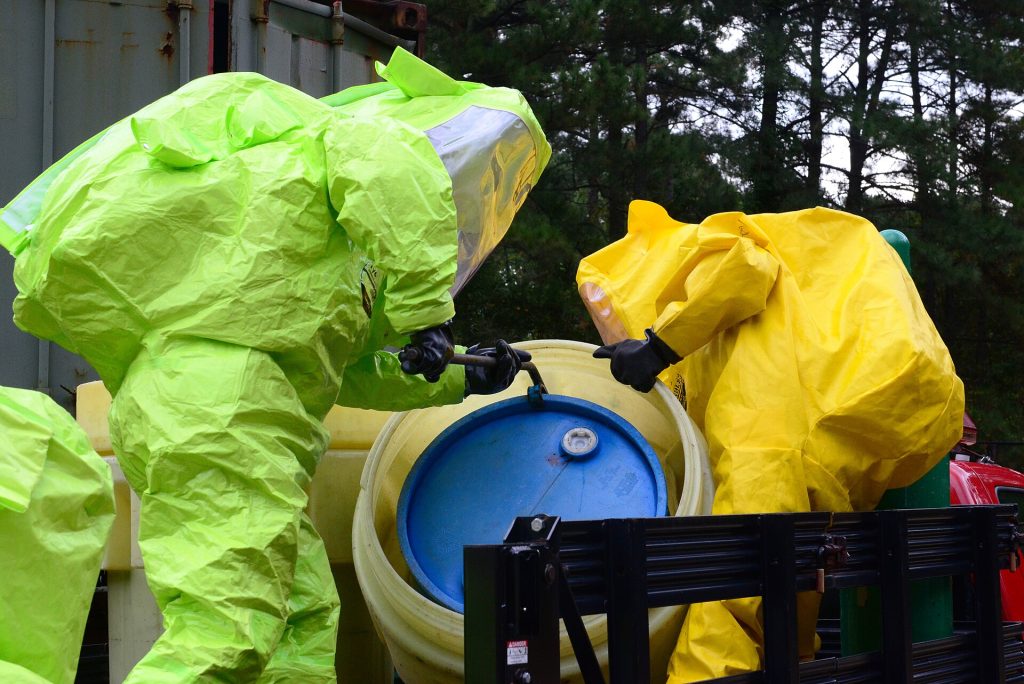
This basic CBRN training module focuses on natural, non-technological techniques for managing chemical, biological and radiological incidents. The sessions teach responders to use naturally available resources for neutralisation and containment.
Session 1: Introduction to CBRN hazards
- Objective: Provide a fundamental understanding of CBRN agents and their effects.
- Technical Methods:
- Presentation on chemical (e.g., chlorine gas), biological (e.g., anthrax), and radiological (e.g., caesium-137) agents.
- Non-Technical Methods:
- Group discussion on real-life incidents, e.g., the 2018 Novichok poisoning in Salisbury, UK.
- Case Study:
- 2018 Salisbury incident: Impact of Novichok, a nerve agent, on civilians and emergency responders.
- Outcome: Understanding various CBRN agents and their impact on health and the environment.
Session 2: Personal Protective Equipment (PPE) Basics
- Objective: Teach the basics of PPE usage and decontamination.
- Technical Methods:
- Demonstration of PPE, such as hazmat suits, gloves, and masks.
- Example: Correct donning and doffing of a Level A hazmat suit.
- Non-Technical Methods:
- Hands-on training for trainees with PPE in a controlled setup.
- Case Study:
- 2014 Ebola outbreak: Emphasis on PPE use to prevent viral transmission among healthcare workers.
- Outcome: Trainees become proficient in PPE usage and understand its importance in CBR incidents.
Session 3: Basic Decontamination Procedures
- Objective: Train on fundamental decontamination methods.
- Technical Methods:
- Demonstration of decontamination using soap, water, and natural materials.
- Example: Decontaminating an area exposed to a chemical agent spill.
- Non-Technical Methods:
- Group simulations for real-time practice.
- Case Study:
- Bhopal gas tragedy: Methods used for decontaminating affected areas.
- Outcome: Ability to carry out basic decontamination safely using simple materials.
Session 4: Hazard Recognition and Reporting
- Objective: Develop skills in recognising and reporting CBRN hazards.
- Technical Methods:
- Training on detection tools (e.g., radiation badges, colorimetric tubes).
- Example: Using a radiation badge to detect radioactive particles.
- Non-Technical Methods:
- Role-play exercises for hazard reporting.
- Case Study:
- 2001 Anthrax attacks in the U.S.: Procedures followed to identify and report biological contamination.
- Outcome: Enhanced competency in hazard detection and reporting protocols.
Session 5: Basic Incident Management
- Objective: Introduce key principles of incident management.
- Technical Methods:
- Introduction to Incident Command System (ICS) for CBRN situations.
- Example: Setting up a command post for managing a chemical spill.
- Non-Technical Methods:
- Tabletop exercises for role assignment and decision-making.
- Case Study:
- 2003 SARS outbreak: Use of ICS for managing the spread of the virus.
- Outcome: Understanding of basic incident management and coordination.
Session 6: First Aid for CBRN Exposure
- Objective: Train responders in first aid techniques specific to CBRN injuries.
- Technical Methods:
- Instruction on treating chemical burns and radiation sickness.
- Example: Treating a burn caused by chemical exposure.
- Non-Technical Methods:
- Practical first aid drills.
- Case Study:
- First aid response during the 2019 Christchurch mosque shooting, with an emphasis on quick medical assistance in a hazardous environment.
- Outcome: Ability to deliver immediate care for CBRN-related injuries.
Session 7: Communication Protocols During CBRN Incidents
- Objective: Establish effective communication in emergencies.
- Technical Methods:
- Training on the use of communication equipment.
- Example: Using emergency radios during a biological incident.
- Non-Technical Methods:
- Communication drills for coordination during simulated incidents.
- Case Study:
- Communication breakdowns during the Fukushima Daiichi nuclear disaster.
- Outcome: Proficiency in using communication tools and following protocols during crises.
Session 8: Basic Scenario-Based Training
- Objective: Apply knowledge in a live simulation.
- Technical Methods:
- Conducting a simulation involving a CBRN scenario.
- Example: Responding to a simulated chemical spill.
- Non-Technical Methods:
- Debriefing and group discussions on performance.
- Case Study:
- Analysis of real-life CBRN drills and exercises conducted by emergency response teams.
- Outcome: Practical experience in handling CBRN incidents in a controlled setup.
Session 9: Phytoremediation Techniques for Field Application
- Objective: Use plants to absorb and neutralise CBR agents.
- Technical Methods:
- Teaching the use of plants like sunflower, water hyacinth, and Indian mustard for environmental detoxification.
- Examples:
- Sunflowers used at Chernobyl to absorb radioactive materials.
- Water hyacinths for heavy metal contamination in Africa.
- Indian mustard for lead extraction in industrial zones.
- Case Study:
- Phytoremediation projects post-Chernobyl disaster.
- Outcome: Ability to implement phytoremediation techniques using natural resources.
Session 10: Biodegradation with Microbial Agents
- Objective: Introduce the use of microbes to degrade toxic chemicals.
- Technical Methods:
- Application of bacteria and fungi in hazardous chemical neutralisation.
- Examples:
- Pseudomonas putida for oil spill cleanup.
- White-rot fungi for pesticide degradation.
- Geobacter species for reducing uranium levels in water.
- Case Study:
- Microbial bioremediation in post-oil spill cleanup efforts.
- Outcome: Understanding of microbial-based cleanup techniques.
Session 11: Natural Buffers in Contaminated Zones
- Objective: Teach the use of natural materials to buffer contaminants.
- Technical Methods:
- Application of materials like clay, charcoal, and lime to neutralise contaminants.
- Examples:
- Use of lime to neutralise acidic soils.
- Charcoal for filtering water.
- Clay barriers for oil spill containment.
- Case Study:
- Natural buffer techniques in industrial cleanup efforts in Eastern Europe.
- Outcome: Knowledge of using simple natural materials for environmental detoxification.
Session 12: Community-driven CBR risk mapping
- Objective: Collaborate with local communities to map and mitigate CBR risks.
- Technical Methods:
- Engaging communities in identifying high-risk areas.
- Examples:
- Mapping areas prone to industrial chemical runoff.
- Using local knowledge for identifying natural drainage patterns.
- Community-driven solutions for managing agricultural runoff.
- Case Study:
- Risk mapping initiatives by rural communities near industrial zones in India.
- Outcome: Ability to work with local communities in identifying and managing CBR risks.
Booking the basic CBRN training module
This basic CBRN training module runs over three to four days and is normally the entry point before the intermediate module and the advanced module. Content is adjusted to the hazards your organisation faces, as described on our capacity building and training workshops page. To arrange a programme, contact us.
India’s national guidance on CBRN preparedness is published by the National Disaster Management Authority.