
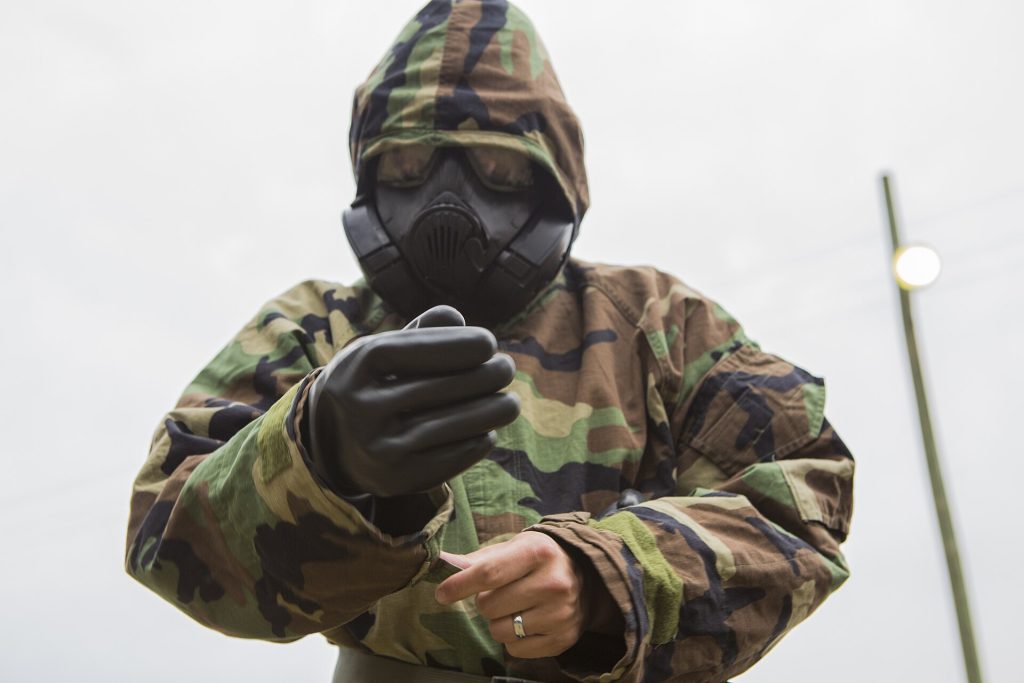
This intermediate CBRN training module builds on the basic training module and emphasises the historical, cultural, and social aspects of CBR disaster management, blending non-technical methods with modern technology for better preparedness.
Session 1: Advanced hazard identification and assessment
Objective: Strengthen skills in detecting and evaluating CBRN hazards.
Technical Methods:
- Training with cutting-edge detection equipment (e.g., portable spectrometers, biological sensors).
- Example:Deploying a portable spectrometer to analyse the chemical makeup of an unknown substance.
Non-Technical Methods:
- Analysis of past incidents and their hazard assessment outcomes.
- Case Study:Assessment strategies during the 2015 Tianjin explosions, focusing on how hazard identification shaped the response.
Outcome: Enhanced capability to accurately identify and assess CBRN hazards with greater precision.
Session 2: Comprehensive Decontamination Techniques
Objective: Equip participants with advanced methods for managing large-scale decontamination processes.
Technical Methods:
- Training on setting up decontamination units and using specialised equipment for major incidents.
- Example:Establishing a decontamination corridor for multiple casualties exposed to toxic agents.
Non-Technical Methods:
- Simulated exercises to replicate large-scale decontamination scenarios.
- Case Study:Decontamination procedures following the 2001 World Trade Center attack, highlighting the unique challenges posed by the event.
Outcome: Proficiency in executing complex decontamination operations in real-world incidents.
Session 3: Refined Command and Control Practices
Objective: Improve leadership and decision-making skills for CBRN scenarios requiring structured command and control.
Technical Methods:
- Hands-on training with incident command systems (ICS) and resource management tools.
- Example:Using ICS software to manage a chemical spill, ensuring proper resource allocation and tracking.
Non-Technical Methods:
- Role-playing exercises to simulate command positions during critical incidents.
- Case Study:Incident command and control during the 2010 Chilean mining disaster, with emphasis on multi-level coordination.
Outcome: Effective management and coordination skills for CBRN incidents requiring robust leadership.
Session 4: Specialised Biological Containment Strategies
Objective: Master advanced techniques for containing and controlling biological threats.
Technical Methods:
- Training with HEPA filters and containment chambers for high-risk biological agents.
- Example:Setting up a mobile biological testing lab for rapid containment of infectious threats.
Non-Technical Methods:
- Study of real-world biological containment cases.
- Case Study:The response to the 2014 Ebola outbreak in West Africa, emphasising containment procedures and public health coordination.
Outcome: Mastery of biological containment and threat management, using advanced technology and techniques.
Session 5: Drone Deployment for CBRN Assessment
Objective: Introduce aerial technology for remote CBRN hazard assessment.
Technical Methods:
- Training in drone piloting, with a focus on using chemical sensors and cameras for real-time data collection.
- Example:Using drones to survey a chemical spill site, capturing both visual and sensor data to map contamination.
Non-Technical Methods:
- Simulation of drone operations in controlled environments to assess CBRN incidents.
- Case Study:Drone use in evaluating the Fukushima nuclear disaster, focusing on radiation detection from the air.
Outcome: Ability to deploy drones effectively for CBRN assessment and hazard identification.
Session 6: Psychological First Aid and Stress Management
Objective: Develop the skills to provide psychological support and manage responder stress during CBRN incidents.
Technical Methods:
- Training on how to identify and address psychological distress in crisis situations.
- Example:Techniques for offering immediate psychological support to colleagues during a high-stress chemical spill response.
Non-Technical Methods:
- Group discussions and exercises focusing on mental health and well-being in CBRN response.
- Case Study:The mental health strategies employed during the 2011 Norway attacks, providing insights into long-term stress management.
Outcome: Enhanced ability to offer psychological support and manage stress for both responders and affected individuals.
Session 7: Collaborative Multi-Agency Response Coordination
Objective: Strengthen coordination skills when working with multiple agencies during CBRN events.
Technical Methods:
- Practical exercises in coordinating with various agencies, using joint protocols and communication systems.
- Example:Organising a coordinated response with medical teams, environmental agencies, and law enforcement during a chemical incident.
Non-Technical Methods:
- Tabletop simulations involving multi-agency stakeholders to assess coordination efficacy.
- Case Study:Multi-agency collaboration during the 2010 Deepwater Horizon oil spill, highlighting the challenges of coordinating with diverse organisations.
Outcome: Ability to effectively coordinate with multiple agencies in CBRN incident response.
Session 8: Scenario-Based Training with Technological Integration
Objective: Apply enhanced skills in simulated CBRN environments using modern technology.
Technical Methods:
- Conducting simulation exercises that incorporate advanced tools such as radiological detection devices and drone operations.
- Example:Managing a simulated radiological incident, using both detection equipment and drones to assess the situation.
Non-Technical Methods:
- Debrief sessions to analyse performance in simulations and identify areas for improvement.
- Case Study:Simulation-based training exercises following the Three Mile Island nuclear incident, illustrating lessons learned in real-time scenarios.
Outcome: Proficiency in managing CBRN scenarios with the integration of technology and refined tactical approaches.
Session 9: Case Studies of Historical CBR Disasters
Objective: Analyse significant CBR disasters to learn critical lessons for future preparedness.
Examples:
- Mustard gas in WWI:The health impact on soldiers and the development of chemical warfare protocols.
- Spanish Flu quarantine:The early 20th-century efforts to control a global pandemic.
- Chernobyl disaster:The radiological response and its long-term consequences for health and the environment.
Case Study: Chernobyl’s immediate and long-term response, focusing on the radiation exposure of first responders.
Outcome: A deep understanding of past CBR disasters, helping to inform and improve current disaster management strategies.
Session 10: Indigenous Knowledge for CBRN Response
Objective: Explore traditional methods and indigenous knowledge in disaster response, particularly toxic environments.
Examples:
- Amazon tribes:Using specific plants for water detoxification in contaminated environments.
- Native Alaskan practices:Managing radioactive waste post-nuclear tests using local materials.
- African methods:Isolating Ebola outbreaks using traditional isolation and containment techniques.
Case Study: The traditional quarantine practices in African communities during the 2014 Ebola outbreak.
Outcome: Incorporation of indigenous knowledge into modern CBRN disaster response strategies.
Session 11: Radiation Communication Strategies
Objective: Simplify the communication of radiological risks for public understanding and engagement.
Examples:
- Visual metaphors:Comparing radiation exposure to everyday experiences like sunlight exposure.
- Safe zone diagrams:Simple illustrations to indicate safe areas during a radiological incident.
- Community outreach:Engaging with the public through grassroots efforts to explain radiological risks.
Case Study: Public communication strategies following the Fukushima disaster, focusing on improving radiation risk understanding.
Outcome: Enhanced communication skills for simplifying radiological threats for the public.
Session 12: AI-powered risk prediction and CBR mapping
Objective: Leverage artificial intelligence and mapping tools for enhanced risk assessment in CBRN scenarios.
Examples:
- AI for chemical spill spread prediction:Using real-time data to predict how spills might move through environments.
- Machine learning in disease outbreaks:Identifying patterns in past biological incidents to forecast potential future outbreaks.
- GIS mapping:Community-driven biological threat detection using mapping technology.
Case Study: AI algorithms used in chemical spill assessments, demonstrating the predictive power of machine learning.
Outcome: Mastery of AI-based tools for predicting and mapping CBR risks, enabling more proactive disaster management.
Booking the intermediate CBRN training module
This intermediate CBRN training module runs over three to four days. It assumes participants have completed the basic module or have equivalent experience, and leads on to the advanced module. See our capacity building and training workshops page for how programmes are designed, or contact us to discuss one.
The international framework governing chemical agents is held by the Organisation for the Prohibition of Chemical Weapons.
Pingback: Advanced CBR Response Training: Tech and Natural Methods