
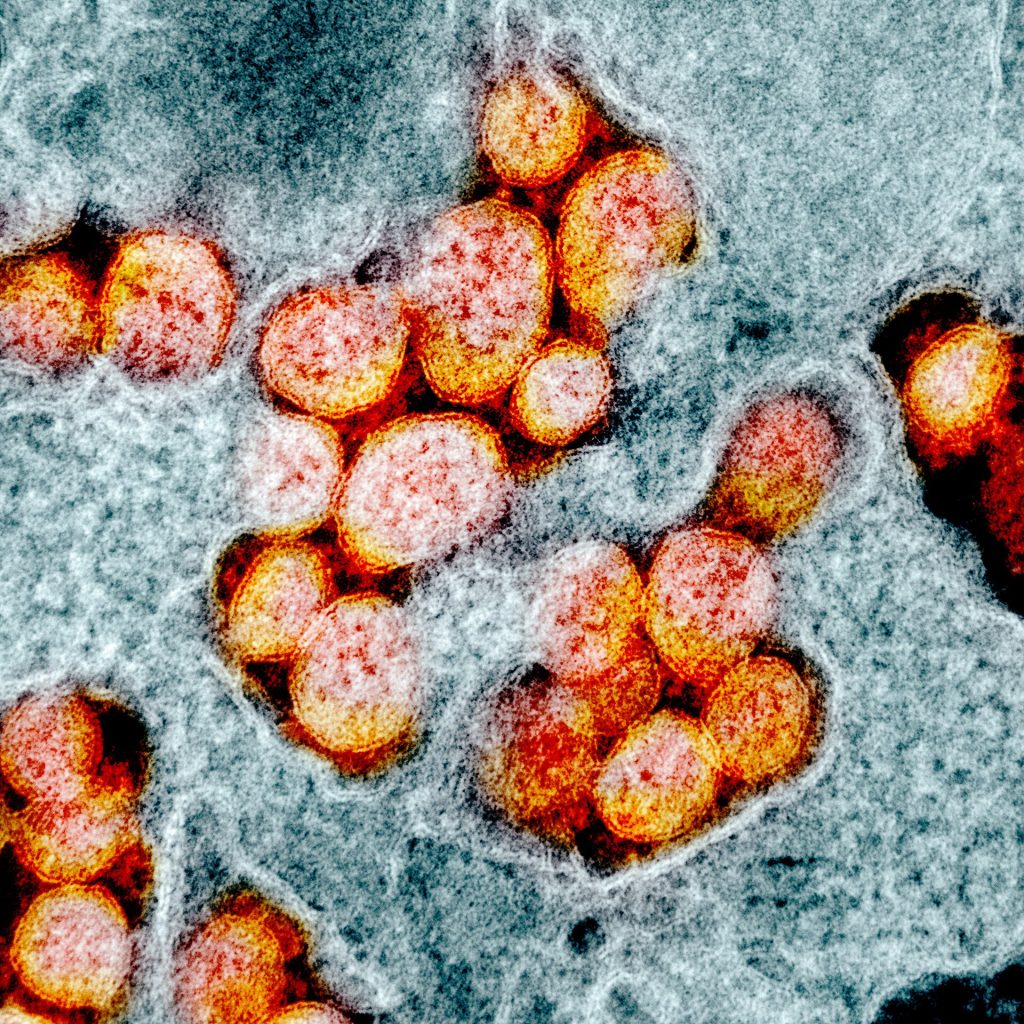
Screening phytoligands against SARS-CoV-2 was one of the first routes open to researchers in early 2020, when no specific medicine existed to prevent or treat COVID-19. This study used computational methods to test whether compounds of herbal origin could bind to the virus’s main drug targets.
It was posted as a preprint in April 2020 by Acharya Balkrishna, Pallavi Thakur, Shivam Singh, Swami Narsingh, Namita Singh and Rakesh Kumar Sharma.
Background: coronaviruses and SARS-CoV-2
Coronaviruses are infectious agents from the family Coronaviridae, classified into four genera: alpha, beta, gamma and delta. They carry a host-derived membrane envelope, a helical nucleocapsid and positive-sense, single-stranded RNA of roughly 26 to 32 kilobases. The viral RNA can initiate infection inside a host without needing additional enzymes.
Since the start of the twenty-first century, coronaviruses have caused three zoonotic outbreaks: severe acute respiratory syndrome in 2002–03, Middle East respiratory syndrome in 2012, and COVID-19, caused by SARS-CoV-2 from 2019. The COVID-19 pandemic began in Wuhan, in Hubei province, and spread to more than 205 countries. It transmits mainly through respiratory droplets and contact with infected people, with a median incubation period of around five days. Initial transmission probably involved zoonotic spread, likely from bats through an intermediate host, after which human-to-human transmission accelerated it. Studies at the time also pointed to possible transmission through faecal shedding.
How the phytoligands were screened
The study set out to screen ligands of herbal origin using rationale-based bioprospection analysis, then to predict their binding potential against the main drug targets for the virus using computer-aided virtual screening.
Viral receptors were selected according to their relevance to the disease process, assessed through a keyword hits matrix analysis of published literature. The drug-likeness and ADMETox descriptors of 24 herbal ligands were predicted computationally, and docking studies were then run on those that passed. Hydroxychloroquine, an existing antimalarial drug, was docked against all the selected viral receptors as well, so its theoretical binding energy could serve as a standard for comparison.
What the phytoligands against SARS-CoV-2 showed
One herbal ligand, gamma-glutamyl-S-allylcysteine, showed highly significant binding energies with the viral spike glycoprotein, the endoribonuclease and the main protease, with binding energy at or beyond −490 kcal/mol for all the tested receptors.
On that measure it showed greater binding potential than the known chemical comparator. The authors are careful about what this means: these are computational docking results, and the value of the study is in presenting information for further clinical work on herbal ligands as possible lead molecules, not in establishing a treatment.
Related research on this site includes work on 2-deoxy-D-glucose in COVID-19 management and the spatio-temporal epidemiology of COVID-19 in India, alongside CDPRR’s research and knowledge sharing work.
The preprint is available at doi.org/10.21203/rs.3.rs-23206/v1.
(Read the full paper in PDF format)
Pingback: 2-Deoxy-D-Glucose and the Pentose Phosphate Pathway in COVID-19