
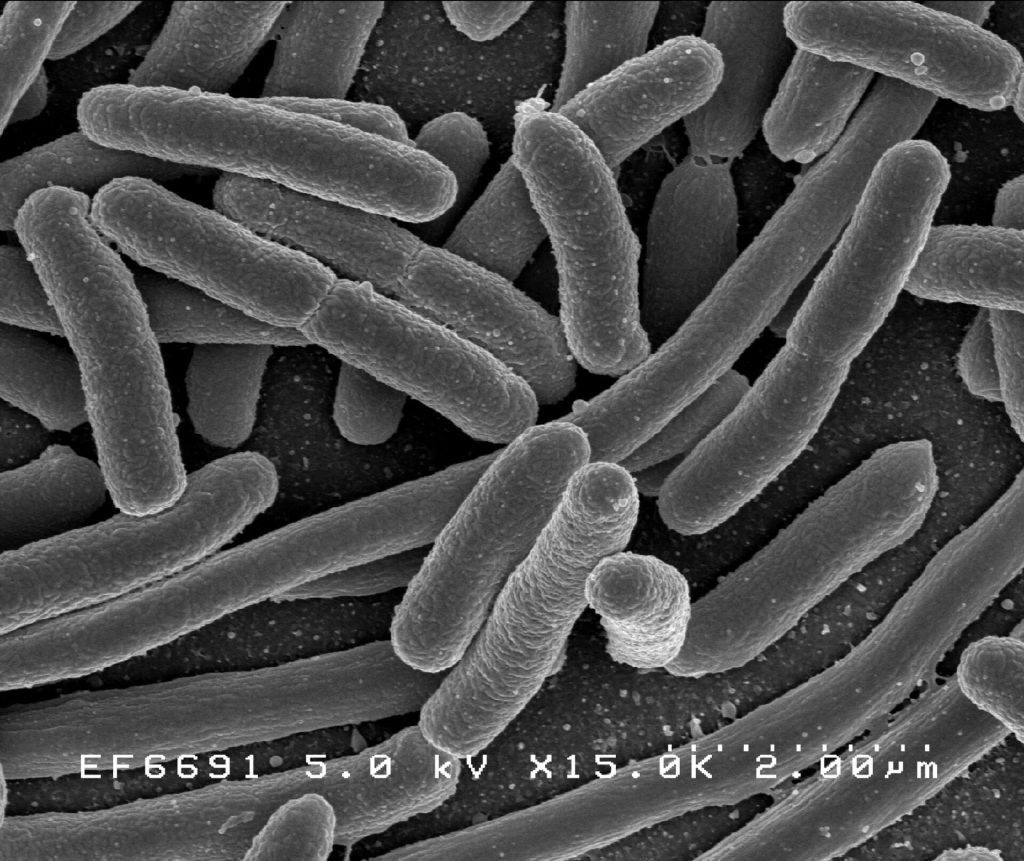
An E. coli biosensor that works on the spot would change how water quality is checked in the field. This study developed one: a portable, fluorescence-based device using magnetic nanoparticles and aptamer-linked quantum dots to detect Escherichia coli in water samples.
It was published in Science of the Total Environment in 2022 by Chitvan Pandit, Hema Kumari Alajangi, Joga Singh, Akhil Khajuria and colleagues, including Rakesh Kumar Sharma.
Why water testing needs a faster method
Micro-organisms are widely present in soil, food and water, and contamination of food and drinking water causes food-borne and water-borne disease. Common contaminants include E. coli and Salmonella species.
Testing water for every possible pathogen is impractical, so indicator organisms are used to judge water quality instead. The World Health Organization lists 28 indicator organisms as waterborne pathogens: 12 bacteria, 8 viruses, 6 protozoa and 2 parasites. The presence of coliform bacteria, and E. coli in particular, is the standard indicator of recent faecal contamination.
The conventional monitoring methods are time-consuming and expensive, require trained personnel and cannot give an instant result in field conditions. That is the gap this work addresses.
How the E. coli biosensor works
Super-paramagnetic iron oxide nanoparticles were synthesised and conjugated with an E. coli-specific aptamer, which binds the bacterial cells. The resulting complex was then separated out by magnetic separation.
The presence of the captured cells was confirmed using standard techniques and confocal laser scanning microscopy, with a second aptamer conjugated to cadmium telluride quantum dots. Those quantum dots provide the fluorescent signal the device reads.
The prototype itself is built around an ATmega328P microcontroller, with an ultraviolet light-emitting diode, a liquid crystal display, a photodiode and a plano-convex lens. The design keeps the cost down while remaining sensitive.
What the E. coli biosensor can detect
The biosensor detects E. coli both qualitatively and quantitatively, down to a lowest limit of 1 × 10² bacterial cells. The authors note that the same approach can be extended to other pathogens, and that the device could also be used to check for bacterial contamination in food samples.
Both types of nanoparticle were confirmed as monodispersed and spherical, with magnetic and fluorescent characteristics strong enough to justify their use as a microbial detection tool.
Why it matters
Contaminated water is a major route of disease transmission, and urbanisation, untreated industrial waste, sewage and hospital discharges all contribute to it. A portable test that gives an answer at the point of sampling is directly useful after floods and other emergencies, when water safety has to be judged quickly.
CDPRR’s wider work in this area runs through its research and knowledge sharing programme and its community-based preparedness programmes. The World Health Organization publishes a fact sheet on drinking water for the wider context.
The full paper is available at doi.org/10.1016/j.scitotenv.2022.154857.
(Read the full paper in PDF format)
Pingback: Antibiotic-Resistant Salmonella and Natural Nutraceuticals