
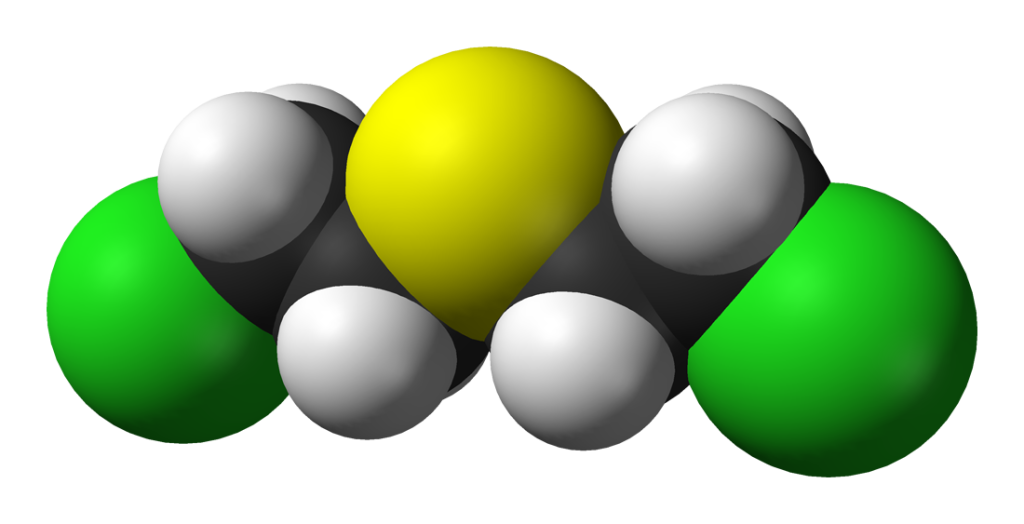
Blister agents have posed a major threat to people since they were first used during the First World War, and have caused around two million casualties. Major incidents have come not only from their use as chemical warfare agents but also from occupational exposure. A clear understanding of these compounds and how they act on the body is essential to developing effective decontamination and treatment.
This review was published in Chemico-Biological Interactions in 2021 by Ashrit Nair, Pooja Yadav, Amanpreet Behl, Rakesh Kumar Sharma, Shweta Kulshrestha, Bhupendra Singh Butola and Navneet Sharma.
What blister agents are
Blister agents, also called vesicants, are human-made chemicals that cause blisters or vesicles on the skin and mucous membranes after contamination. Exposure may happen through intentional release as a chemical warfare agent, or unintentionally at a workplace. Among them, mustards and lewisites have been identified as the agents of greatest concern.
They are not as lethal as nerve agents, but they cause severe injury that can lead to prolonged illness or death. During the First World War they caused more casualties than any other chemical warfare agent in use at the time.
How blister agents affect the body
These agents may be present as a vapour, a liquid or a semi-solid, and they act mainly on the skin and other epithelial tissues. Depending on the route of exposure they can also damage the eyes, the respiratory tract and internal organs. The most likely routes are inhalation, ingestion, and dermal and ocular contact.
On contact with skin, these chemicals cause localised degeneration of the skin and mucous membranes and set off inflammatory changes. Cells undergo apoptosis, the basal membrane degrades, and blisters or bullae form. Vesicants are highly reactive and interact with proteins, DNA and other cellular components, producing drastic cellular changes almost immediately after contamination. Alkylation of contaminated DNA is a defining feature of this group.
Clinical effects may appear within seconds or take between two and twenty-four hours to show, depending on the agent. They can be dermal, with blistering and skin erythema; respiratory, with pharyngitis, cough and breathlessness; ocular, with blurred vision, conjunctivitis and blindness; or gastrointestinal, with nausea, vomiting and diarrhoea. Higher doses can cause cardiac arrest and affect the central nervous system, leading to convulsions, tremors or coma.
Detection, decontamination and the gap that remains
Various decontamination solutions and detection technologies have been developed and have proved effective for timely mitigation. The main obstacle is the lack of a proper understanding of how these compounds act at a toxicological level. Because of their high toxicity and restricted status, very little research has been possible, and a great deal about them is still not clearly understood.
The review brings together detailed and updated information on the physical, chemical and biological aspects of the different blister agents, and sets out their mechanism of action, toxicological effects, detection technologies and possible decontamination strategies.
Blister agents were first developed as an industrial chemical in 1822, and sustained research on them began after the chlorine attack of 1915.
Work on recognising and responding to incidents of this kind forms part of the CBRN training modules offered by CDPRR, alongside its work on CBRN disaster prevention. The Organisation for the Prohibition of Chemical Weapons holds the international framework governing these agents.
The full paper is available at doi.org/10.1016/j.cbi.2021.109654.
(Read the full paper in PDF format)