
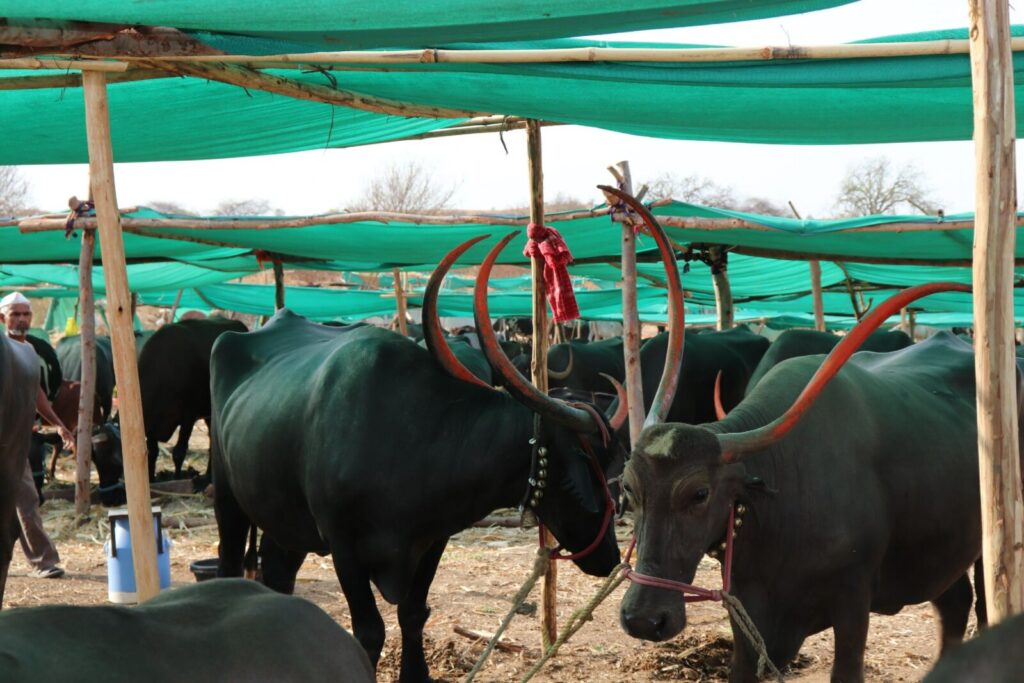
In February 2016 the civic body in Latur stopped supplying water through taps. The Manjara dam, the city’s main source, had run dry after successive failed monsoons. From April, a train named Jaldoot carried water 340 km from Miraj to Latur. By its 111th and final trip in August it had delivered about 2.79 crore litres, and the city was still short of what it needed each day.
Ten years later, Marathwada is in drought again. On 25 September 2026 the Maharashtra government declared drought in 265 of the state’s 358 talukas, and in October extended the declaration to more than 300. Karnataka had declared 177 of its 240 taluks drought-affected by 22 September. Relief is now flowing: tankers, fodder, deferred loan recovery, a halt on cutting power to farm pumps. All of it is needed, and all of it starts once the damage is already done.
Drought proofing is the work done between droughts. It decides whether a dry year becomes a lean year or a disaster.
How drought builds
Drought arrives slowly and in stages. A rainfall shortfall is a meteorological drought. When soil moisture runs too low for crops, it becomes an agricultural drought. When reservoirs, tanks and aquifers fall, it is a hydrological drought, and that stage can last well into the next monsoon.
The Department of Agriculture estimates that about 68 per cent of India’s cropped area is vulnerable to drought. Around 33 per cent receives less than 750 mm of rain a year and is classed as chronically drought-prone; another 35 per cent receives 750 to 1,125 mm. Because most of the year’s rain falls during the south-west monsoon, a failed season leaves farmers waiting a full year for the next chance.
Hydrological drought can also build without any shortfall in rain, simply because people take out more water than the rain puts back. The Dynamic Ground Water Resources Assessment for 2025, prepared by the Central Ground Water Board and the states, classes 730 of India’s 6,762 assessment units, about 10.8 per cent, as over-exploited, meaning more water is drawn each year than is recharged. Punjab extracts 156 per cent of its annual extractable groundwater, Rajasthan 147 per cent and Haryana 137 per cent. The national picture has improved since 2017, when over-exploited units made up 17.2 per cent, but in the worst blocks a weak monsoon falls on aquifers that are already overdrawn.
Declare on evidence, plan beyond the declaration
Under the Manual for Drought Management, issued in 2016 and updated in 2020, state governments declare drought. The manual sets out a staged test: first, rainfall deficit and dry spells; then impact indicators such as the area sown, vegetation and soil moisture from satellite data, and water in reservoirs and aquifers; and finally field verification before a declaration is made. Weekly maps from the India Drought Monitor at IIT Gandhinagar grade conditions from abnormally dry to exceptional drought and help officials see where stress is building.
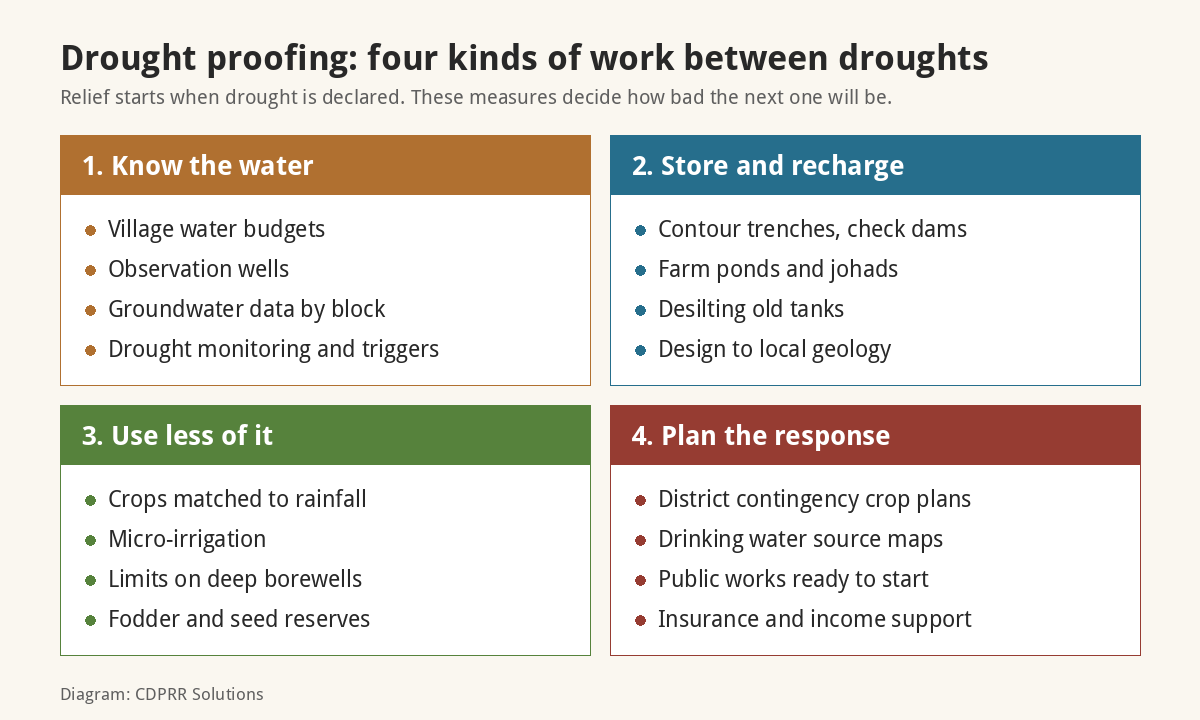
A declaration unlocks relief money. It does not, on its own, reduce the next drought. Districts that come through dry years well tend to have done three things in advance: they know how much water they have, they store and recharge as much rain as possible, and they match what they grow to the water available.
Know the water: budgets at village scale
Hiware Bazar in Ahmednagar district gets about 300 to 400 mm of rain a year. In the 1970s and 1980s it faced severe water shortage and land degradation. From the early 1990s, under sarpanch Popatrao Pawar, the village built contour trenches, check dams and other conservation works, and in 2002 it began an annual water budget with help from the district groundwater department.
Each year the gram sabha measures rainfall and the water level in observation wells, sets aside water for drinking and livestock first, and then decides how much can go to irrigation and which crops to sow. Deep borewells for irrigation are banned, and so are sugarcane and cotton. In the 2003-04 drought, Hiware Bazar was the only village in its block that did not need tanker water, and Pawar has said the village has held groundwater at about 11 to 12 metres below ground since 1995, against about 37 metres earlier.
Its neighbour Ralegan Siddhi, the better-known watershed village, shows the other side. Once water returned, farmers there dug around 200 deep borewells over a decade, and during the drought of 2015 the village had to ask for tankers again. Recharge structures without rules on how much water is pumped out do not keep a village safe for long.
The Atal Bhujal Yojana, launched in December 2019 with an outlay of Rs 6,000 crore shared equally by the Centre and the World Bank, applies this idea at scale. It covers about 8,200 water-stressed gram panchayats in seven states, each of which prepares a water budget and a water security plan, and rewards states for measurable results rather than for construction alone.
Store and recharge the rain
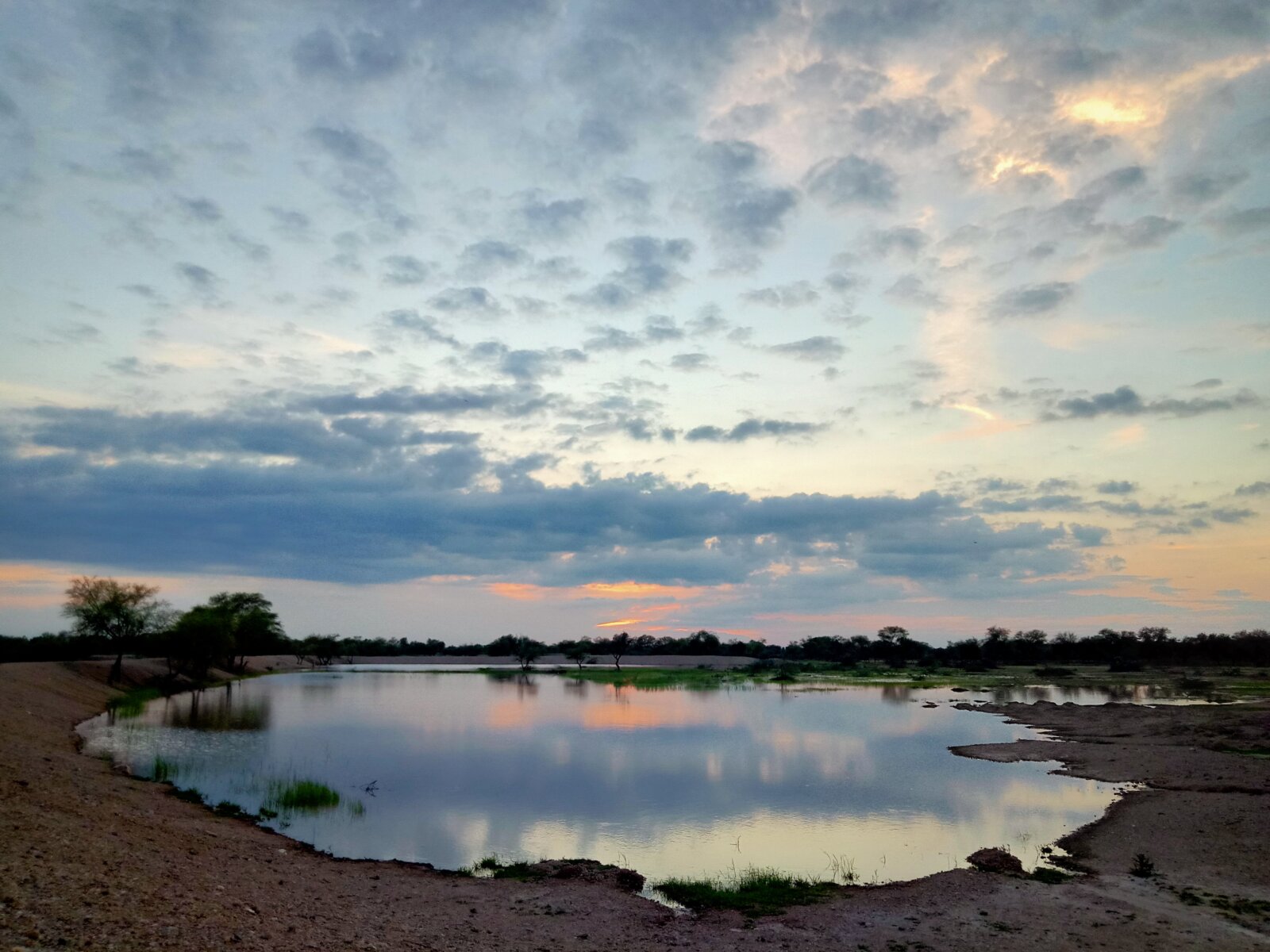
In Alwar district of Rajasthan, the Tarun Bharat Sangh began helping villagers build johads, traditional earthen check dams, in 1985. By the organisation’s count, 8,600 johads were built in 1,058 villages, about 3,500 by the organisation and the rest by villagers themselves. The Arvari river, dry for decades, began to flow again, and the villages along it formed the Arvari Sansad, a river parliament of 72 villages that sets rules on crops and water use.
The same principles apply elsewhere, adjusted to the ground:
- treat the catchment from ridge to valley, starting with trenches and planting on the upper slopes;
- desilt and repair old tanks and ponds before building new ones;
- site recharge works on the advice of a hydrogeologist, since hard basalt and granite store far less water than alluvium;
- give the community ownership and a maintenance fund, so structures are cleaned and repaired after each monsoon.
Grow for the rain you get
Cropping patterns decide how fast a drought bites. Water-hungry crops grown on groundwater in low-rainfall blocks drain the aquifer in normal years and leave nothing for a dry one. Shifting part of the area to millets, pulses and oilseeds, and moving irrigated crops to drip and sprinkler systems, stretches the same water further.
ICAR and its Central Research Institute for Dryland Agriculture have prepared District Agriculture Contingency Plans for all districts. They set out which crops and varieties to sow if the monsoon is late or breaks early, and how to manage livestock, fodder and fisheries in a bad season. In June 2026, as the monsoon faltered, the Union agriculture ministry identified about 315 districts as vulnerable, 111 of them high priority because of limited irrigation, and asked states to put these plans into action and keep extra seed ready for re-sowing. The plans work best when extension staff and Krishi Vigyan Kendras turn them into advice farmers receive before sowing, not after the crop has failed.
Prepare the response before it is needed
Drought response is predictable, so it can be prepared. Each drought-prone district should keep:
- a map of drinking water sources, with the villages most likely to need tankers and the sources that can supply them;
- a list of approved public works under MGNREGA, such as desilting and farm ponds, ready to start when the declaration comes;
- sites for fodder banks and cattle camps, and arrangements for buying fodder;
- clear triggers, linked to the drought manual’s indicators, for each step of the response.
Maharashtra first considered water trains for Marathwada in January 2013, three years before Jaldoot ran. Planning that far ahead for storage and demand, rather than for transport, would have spared Latur the trains.
Key takeaways for practitioners
- Treat drought as three linked stages, meteorological, agricultural and hydrological, and monitor each.
- Use the groundwater assessment to target over-exploited and critical blocks first.
- Help villages prepare annual water budgets and agree on rules for pumping and crops.
- Pair recharge works with limits on extraction, or the gains will be pumped away.
- Design watershed works to local geology and fund their maintenance.
- Put district contingency crop plans in farmers’ hands before sowing.
- Prepare drinking water, fodder and public works plans in normal years, with clear triggers.
Next in the series: Battling the Blazing Wild, on community-based wildfire prevention and suppression. To discuss drought risk assessment, water budgeting or district drought management plans, contact CDPRR Solutions at www.cdprr.com.